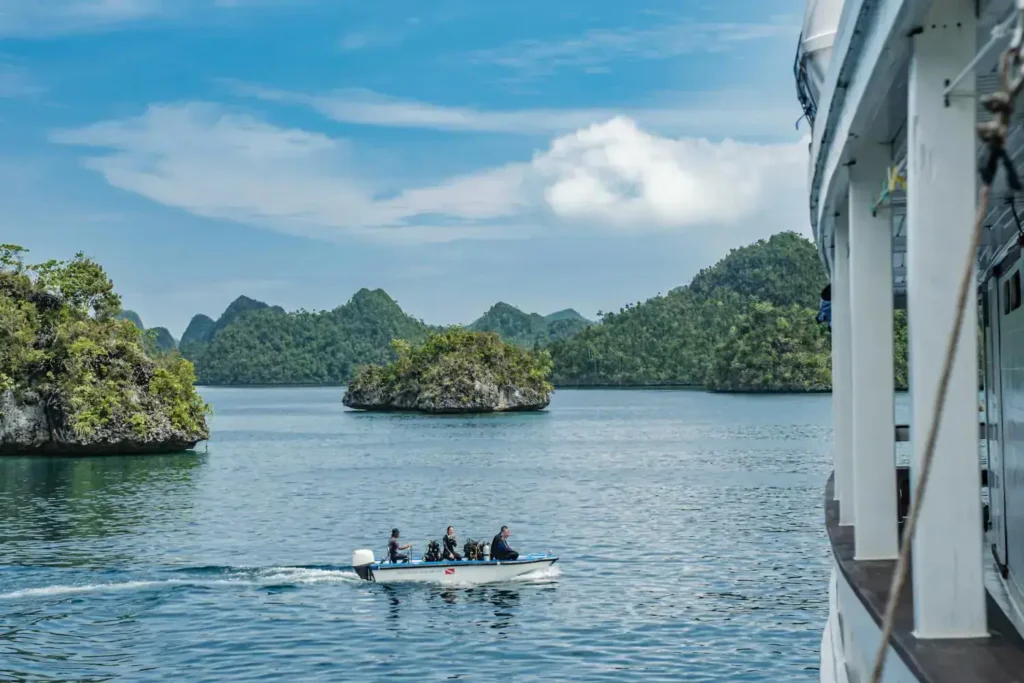

Raja Ampat sits at the top of many divers’ wish lists, yet its remote geography can make trip planning feel complicated. A Raja Ampat liveaboard solves that problem by combining accommodation, transportation, meals, dive support, and access to far-flung sites in one continuous journey. Instead of returning to the same harbour each day, divers wake up closer to reefs, channels, manta cleaning stations, and limestone islands that would otherwise require long transfers.
What Makes Raja Ampat Exceptional for Divers?
Raja Ampat lies within the Coral Triangle and is recognised for its extraordinary marine biodiversity. UNESCO reports that its reefs support more than 75% of all known coral species, over 1,320 coral reef fish species, and five rare or endangered sea turtle species. These figures help explain why one diving itinerary can include remarkably different underwater environments, from soft-coral gardens and fish-filled pinnacles to current-swept channels.
For divers, the appeal is not simply the number of species. It is the density, colour, and variety found across relatively compact areas. One dive may focus on pygmy seahorses and nudibranchs, while the next may feature manta rays, reef sharks, turtles, barracuda, or large schools of fusiliers.
Why Choose a Liveaboard Instead of a Land-Based Stay?
Raja Ampat is spread across an extensive network of islands. A land-based stay can be rewarding, but it usually limits divers to sites within practical reach of one resort or homestay.
A Raja Ampat liveaboard can travel between different areas, sometimes moving overnight, without requiring guests to repeatedly pack their belongings, arrange ferry transfers, or spend hours travelling from shore to the dive sites.
This format also creates a smoother diving rhythm. Guests can prepare, dive, eat, rest, and review photographs without losing valuable time to road or harbour transfers. Many itineraries also include non-diving experiences such as viewpoint hikes, lagoon visits, beach stops, and village encounters, creating a broader sense of the archipelago.
Which Areas Can a Raja Ampat Itinerary Cover?
The right route depends on the length of the trip, seasonal conditions, departure port, and vessel schedule.
Central Raja Ampat is known for fish-rich reefs, jetties, channels, and manta encounters. Southern Raja Ampat, particularly the Misool region, is associated with dramatic karst scenery, colourful soft corals, and remote reef systems. Northern routes may combine varied reef structures, channels, and island landscapes.
Longer journeys may connect more than one region, while shorter trips generally concentrate on a more focused area. This is why itinerary details matter more than simply choosing the longest cruise.
Before booking, divers should compare:
- The regions included in the route
- The expected number of dives
- Arrival and departure arrangements
- Group and dive-guide ratios
- Planned land excursions
- Equipment and nitrox availability
A carefully selected itinerary can offer a more suitable experience than a longer journey that does not match the diver’s interests or ability.
What Marine Life Might Divers Encounter?
Wildlife encounters can never be guaranteed, but Raja Ampat offers exceptional variety. Depending on the site and diving conditions, guests may encounter reef and oceanic manta rays, wobbegong sharks, walking sharks, turtles, trevallies, barracuda, bumphead parrotfish, and dense schools of reef fish.
Macro enthusiasts can search for pygmy seahorses, pipefish, shrimps, crabs, and colourful nudibranchs. Wide-angle photographers can focus on coral-covered slopes, sea fans, schooling fish, manta rays, and sunlit jetties.
A well-planned Raja Ampat liveaboard itinerary can therefore work well for groups with different interests. Photographers, marine-life enthusiasts, experienced divers, and travellers seeking remote scenery can all find something memorable within the same journey.
Who Is a Raja Ampat Liveaboard Best For?
Raja Ampat can suit confident recreational divers, but conditions vary significantly between dive sites. Some locations are calm and sheltered, while others may involve strong currents, negative entries, or deeper profiles.
Divers should honestly review their certification, recent experience, buoyancy control, air consumption, and comfort in moving water before selecting a route.
Less-experienced divers should ask whether the operator separates groups according to ability and whether guides can adapt dive-site selection when necessary. Experienced divers should check whether the itinerary includes current-exposed reefs, advanced entries, or more remote locations suited to their skills.
Certification alone should not be the only consideration. A recently active diver with good buoyancy may be better prepared than someone with advanced certification who has not dived for several years.
How Do You Choose the Right Vessel and Operator?
Cabin photographs are only one part of the decision. Travellers should also review the vessel’s safety procedures, emergency equipment, guide-to-diver ratio, nitrox availability, camera facilities, tender setup, and operational experience in Raja Ampat.
The quality of dive briefings and local route knowledge can shape the journey just as much as the vessel itself.
Wallacea Dive Cruise operates Raja Ampat itineraries aboard MV Ambai and MSY Seahorse. The company states that its team has more than 20 years of liveaboard experience in the region.
Divers can explore available routes through the Raja Ampat Diving Liveaboard page and compare the itineraries, vessels, and departure schedules before choosing their journey.
Why Is Responsible Diving Important in Raja Ampat?
Raja Ampat’s exceptional biodiversity makes responsible behaviour essential. Divers should maintain neutral buoyancy, avoid touching coral, secure gauges and camera equipment, and keep a respectful distance from marine life.
Manta rays, sharks, and turtles should never be chased, touched, blocked, or surrounded for photographs. Divers should allow animals to control the encounter and leave enough space for them to move naturally.
Choosing an operator with clear environmental procedures can also help reduce unnecessary pressure on fragile dive sites.
A liveaboard provides access to remote marine environments, but that access carries responsibility. The best experience is not measured only by the number of sightings. It is also measured by how carefully each encounter is managed.
Frequently Asked Questions
It is a multi-day diving vessel providing cabins, meals, guides, dive support, and transportation between remote sites throughout the Raja Ampat archipelago.
The number varies according to the itinerary, weather, transfers, and arrival days. Check the published schedule and confirm all inclusions with the operator.
Not always, but good buoyancy, recent experience, and confidence in currents are valuable. Some routes may recommend advanced certification or a minimum number of logged dives.
Popular routes and cabin categories can fill well ahead of departure. Booking early provides better flexibility for dates, vessels, flights, and cabin selection.
Yes. Its coral scenery, schooling fish, manta rays, macro species, and varied reef structures provide opportunities for both wide-angle and macro photography.
This depends on the vessel and route. Some journeys offer snorkelling and land excursions, but non-divers should confirm available daily activities before booking.